Outline Planning Permission for 2 no. self build dwellings on appeal
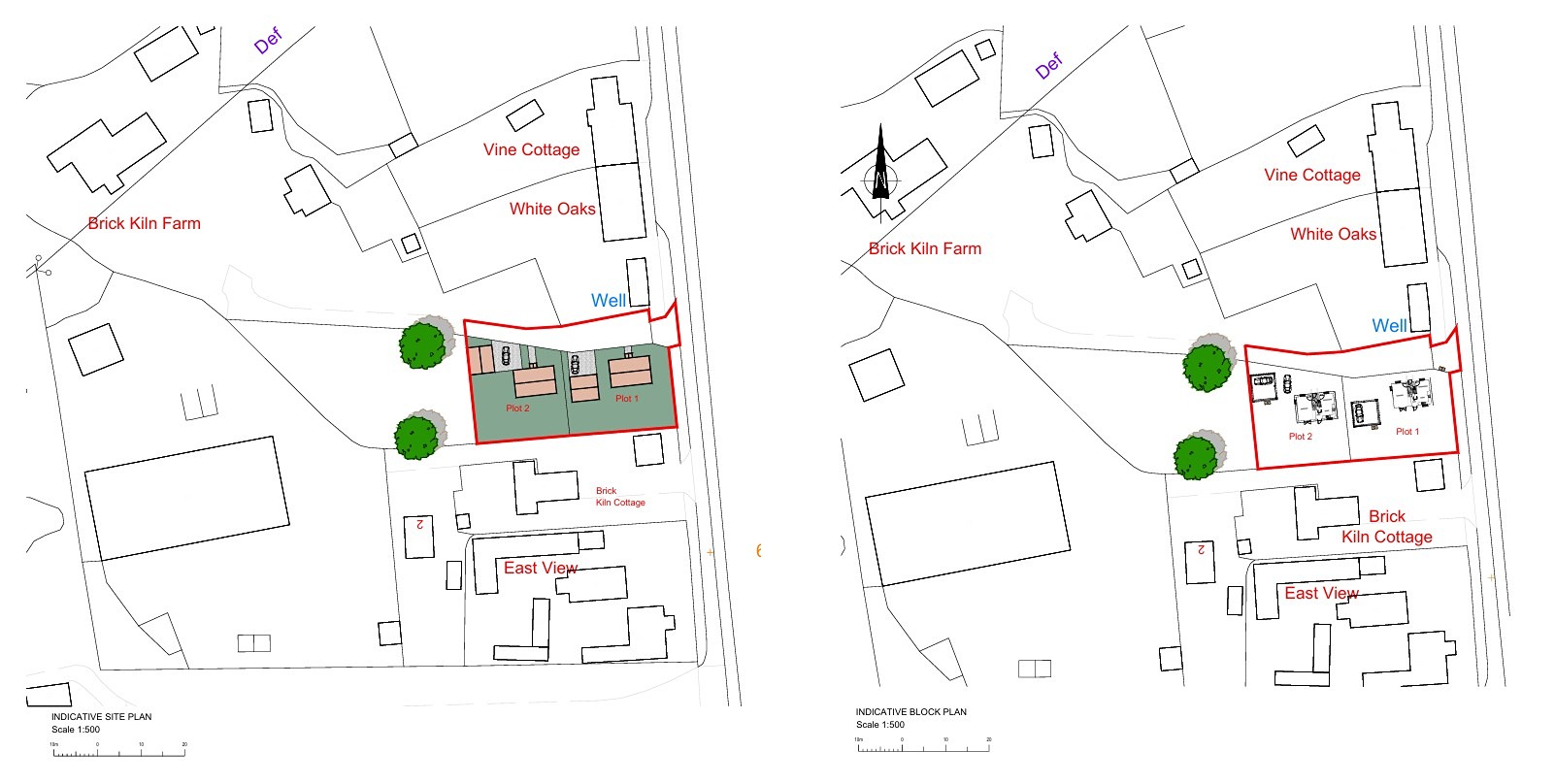
Hardy Planners are delighted to have secured outline planning permission for 2 no. self-build dwellings on appeal at Brick Kiln Farm in Welborne, 1 mile south of Mattishall. A great result delivered in collaboration with Lisa Allard, and one we’re looking forward to building on in future projects.
The main issues the planning inspector considered were:
whether the site is a suitable location for housing having regard to the Council’s development plan and its access to services and facilities;
the effect of the development on the character and appearance of the area; and
the effect of the development on the integrity of the habitat sites.
Suitable Location for Housing
Hardy Planners made the case that the site lies within the settlement of Welborne with a population of 147 and its own parish council. Policy 7.5 of the GNLP allows small scale self build development across ALL PARISHES. Importantly, Welborne is part of a Parish Council. With no defined settlement boundary, the Inspector made it clear it is her judgement as to whether the site lies adjacent to one. She pointed out that the appeal site lies amongst a cluster of dwellings in an area known as Welborne Common, set away from Welborne to the north-east where its limited community facilities are located. It is intervened by open countryside, such that the two areas are distinct.
She highlighted that there is no definition of what is meant by ‘other settlement’ in the GNLP, or the National Planning Policy Framework and that "the ordinary dictionary definition suggests a settlement is a place where people establish a community". Importantly, she concluded a settlement devoid of community facilities does not necessarily mean it cannot benefit from that definition, as is the case for many small settlements. In this case, the appeal site is flanked by residential dwellings and is set amongst a wider cluster of development known as Welbourne Common, which in the Inspector's judgement is capable of constituting a settlement. On this basis, she found that the appeal gains support from Policy 7.5 of the GNLP, insofar as it lies within an ‘other settlement’ without a development boundary.
Hardy Planners listed all facilities and services in the area and all required for day to day needs were within 1.5 miles in Mattishall including doctors surgery and schools. The Inspector agreed the appeal site is not isolated and agreed with us that the distances from the appeal site to the services most important to fulfilling the daily needs of future occupiers are not substantial. Whilst they are far enough away that it is unlikely future occupiers would regularly choose to walk or cycle to access them, paragraph 110 of the NPPF allows for more flexibility in rural areas to services and facilities. The absence of footpaths and streetlighting would be a deterrent for pedestrians, and the lack of public transport connections within a reasonable walking distance also counts against the scheme. Cycling may be more attractive, as the roads are relatively straight with generally good forward visibility. Whilst the Inspector concluded there would be limited opportunities to reach services and facilities by sustainable modes, she found that the appeal site lies within an ‘other settlement’ drawing support from GNLP Policy 7.5, which is permissive of small scale self build development in such circumstances. This policy aligns with the Framework insofar as it also supports opportunities for small scale self build housing and she gave this substantial weight. She concluded the appeal scheme broadly complies with Policy DM1.1 given that the development complies with another specific development plan policy: GNLP Policy 7.5. Consequently, having regard to the development plan, she determined the site is located in a suitable location.
The Effect of the Development on the Character and Appearance of the Area
The Inspector found that the site would not have a detrimental impact on the form and character of the area and that the dwellings orientation could point towards Welborne Common at Reserved Matters stage in line with other dwellings in the surrounding area.
The Effect of the Development on the Integrity of the Habitat Sites
The appellant took our advice to purchase Nutrient Neutrality (NN) credits now to trigger paragraph 11 of the NPPF to provide the scheme with the best chance of success: He paid £23,000 of credits for two dwellings. He could sell them back for 90% of what he paid and he was prepared to take the risk of them being devalued in order to give the scheme for his two daughters a more flexible planning assessment in line with the tilted planning balance.
The appellant also completed a signed Unilateral Undertaking to secure GIRAMS and both the LPA and the council were happy with this.
Conclusions:
The Council is only able to demonstrate 4.85 years supply of housing land
A shortfall on the necessary five-year housing land supply (5YHLS) required by the Framework warrants the application of Paragraph 11(d) of the Framework. This relates to the presumption in favour of sustainable development, mirroring the requirement set out in Local Plan Policy DM1.1.
The Inspector gave consideration to directing development to sustainable locations, making effective use of land, securing well designed places and providing affordable homes, individually or in combination.
The scheme would boost housing supply in the district and importantly whilst Hardy Planners made the case based on appeal decisions and Freedom of Information Requests (FOIs) that the lack of a 5YLS and self build demand being met is a "double hit" resulting in a more flexible assessment regarding location, the Council accept that it has not been able to demonstrate that it has sufficient SBCB permissions to meet the identified demand as required by the Self Build and Custom Housebuilding Act 2015.
Vitally in terms of planning weight, the Inspector afforded "considerable" weight to the lack of self build demand being met as even small sites can make an important contribution to meeting the housing needs of an area.
The site’s position between built form on either side results in the site for two dwellings would not harmfully encroach into the open countryside and would read visually as an infill development.
It would make efficient use of land with an appropriate density to which the Inspector attached moderate positive weight.
Modest weight was ascribed to it being small-scale development meaning that it could potentially be built out quickly, bringing economic benefits during the construction phase and would help support and enhance the vitality of the rural community, in line with Paragraph 83 of the Framework.
The appeal site is within an ‘other settlement’ and accords with GNLP Policy 7.5, the objectives of which is to boost the supply of self build homes in areas not supported by other development plan policies.
The appeal site forms part of the Brandon Parva, Coston, Runhall and Welborne parish and GNLP Policy 7.5 explains that the policy relates to all parishes and that its purpose is to allow for a limited number of additional dwellings in each parish beyond those allocated or allowed for as larger scale windfall sites through other policies in the plan. This policy is intended to capture wide geographical areas, and that there is a level of expectation that some of those parishes would be rural as the policy operates as an exception to other more general housing policies. For this reason, the Inspector gave less weight to the site’s position away from services and facilities.
The site has some limited options for more sustainable travel, and the Inspector recognised that these vary between urban and rural areas.
In the final analysis, the Inspector did not find that the limited harm identified from its location away from services and facilities significantly and demonstrably outweighed the benefits, when assessed against the policies in the Framework taken as a whole.
If you have a rural site or exploring self-build opportunities, don’t assume a lack of facilities is a barrier—there may be more flexibility than you think.
We’re always happy to review sites and advise on strategy early in the process.